You’ve probably typed some version of this into Google already:
“How much does a South Africa holiday actually cost?”
And if you’re anything like many of the thoughtful couples I speak to, the answers online have probably left you more confused than informed.
One website says you can do South Africa for under £3,000.
Another suggests £20,000 is perfectly normal.
A safari lodge catches your eye, then you realise the price may not include international flights, internal flights, transfers, park fees, drinks, tips, or the extra nights needed to make the routing actually work.
So what is realistic?
The honest answer is that most UK couples planning a well-paced South Africa holiday in 2026 should expect to spend somewhere between £8,000 and £15,000 for two people, depending on the route, season, safari choice, accommodation style and level of support.
Can you spend less? Sometimes, yes.
Can you spend far more? Very easily.
But for the kind of South Africa holiday many people are really imagining, with Cape Town, the Winelands, a meaningful safari, good accommodation, sensible logistics and proper support, the figures below are a much more useful starting point.
If you are still deciding how long to go for, it may also be worth reading How Long Do You Really Need for a First Trip to South Africa? alongside this article, because duration and cost are very closely linked.
The ranges below reflect realistic 2026 pricing for properly arranged UK holidays, rather than the lowest possible internet basket of separately booked components.
That matters because South Africa is not usually one simple booking.
A well-planned trip often involves:
When you compare prices, make sure you are comparing like with like.
A holiday that includes proper logistics, financial protection, trusted suppliers and support will not always look the same as a trip pieced together from the lowest direct rates online.
That does not make one approach automatically right or wrong. It simply means the comparison needs to be fair.
If you are still weighing up whether to plan independently or use a specialist, you may find Is a South Africa Travel Specialist Worth It? Booking Yourself vs Using an Expert useful before you start comparing quotes.
For most couples travelling from the UK in 2026, these are sensible working ranges.
| Total Budget for Two | What It Usually Looks Like |
|---|---|
| £8,000–£10,000 | A sensible first South Africa trip with good quality choices |
| £10,000–£15,000 | The sweet spot for many couples wanting comfort, flow, a stronger safari and may include a few nights beach such as Mauritius |
| £15,000–£20,000 | A premium trip with high end safari, better rooms and more private arrangements |
| £20,000+ | Luxury, premium flights, Indian Ocean beach extension or a more complex itinerary |
These figures are not meant to scare you. They are meant to help you plan clearly.
South Africa can still offer excellent value compared with many safari destinations, especially when you consider the variety you can include in one trip: city, wine, coast, mountains, wildlife, food, history and cultural depth.
But it is also a destination where spending thoughtfully matters more than simply chasing the lowest price.
The reason South Africa pricing feels confusing is that two itineraries can look similar on paper but feel completely different once you are there.
Both might say:
Cape Town, Winelands and safari.
But one may involve awkward flight times, rushed transfers, basic lodge guiding and too much time on the road.
Another may flow beautifully, with well-chosen locations, a safari that matches your expectations, enough breathing room between regions and local support in the background.
The biggest price differences usually come down to five things.
Flights are one of the biggest moving parts.
Johannesburg is often better value than Cape Town, especially outside peak periods. Cape Town is hugely popular during the South African summer, which overlaps with the UK winter, so prices can climb quickly around Christmas, New Year, February half-term and Easter.
As a broad guide, economy flights from London to South Africa can sometimes start from the late hundreds on selected dates, but realistic long-haul planning should allow more flexibility, especially if you need specific dates, direct flights, regional UK departures or better timings
For many couples, flights are not the place to be too clever.
A cheaper fare with poor timing, a long layover or awkward domestic connection can make the first two days of the trip feel harder than they need to.
That does not mean you need to fly business class. It simply means flight choice should be part of the overall experience, not an afterthought.
Safari is usually the biggest difference between a modest South Africa trip and a more special one.
This is where people often get caught out.
A national park stay, a larger lodge, a malaria-free Eastern Cape reserve and a private reserve bordering Kruger can all be described as “safari”, but they are not the same experience.
You are not just paying for a bed.
You may be paying for:
A safari does not have to be the most expensive part of the trip, but very often it is the part where spending more genuinely changes the experience.
If you are unsure whether a national park or private reserve is right for you, read Kruger National Park vs Private Game Reserve: Which Safari Is Right for You? before deciding where to allocate your budget.
A common mistake is thinking the cheapest way to do South Africa is to squeeze in as much as possible.
Cape Town, Winelands, Garden Route, safari, Johannesburg, Victoria Falls and Mauritius can look wonderful on a map.
In practice, every extra region adds cost.
Sometimes that cost is obvious, such as a flight or transfer.
Sometimes it is hidden in the quality of the experience, because you spend more time checking in, packing, moving, waiting and recovering than actually enjoying where you are.
For many first-time visitors, 10 to 14 nights is the most sensible range.
Under 10 nights, you need to make firm choices.
At 12 to 14 nights, you can usually include Cape Town, the Winelands and safari without making the trip feel too thin.
Over 14 nights, you can start adding deeper layers such as the Garden Route, KwaZulu-Natal, the Drakensberg or a beach extension.
If your first question is “can we do it all?”, the more useful question may be:
“What do we want to experience properly?”
South Africa has a wide accommodation range, and this is one of the reasons it can work so well for thoughtful travellers.
You do not need every night to be top-end.
In fact, some of the most memorable stays may be smaller guesthouses, owner-run lodges or boutique properties with warmth and character rather than big-hotel polish.
But location matters.
A cheaper Cape Town hotel in the wrong area may cost you more in transfers, inconvenience and lost enjoyment.
A Winelands property far from the restaurants or estates you want to visit may look good value until you realise you need more transport.
A safari lodge with a lower nightly rate may not offer the guiding style, reserve quality or atmosphere you imagined.
This is where South Africa rewards thoughtful spending rather than lavish spending.
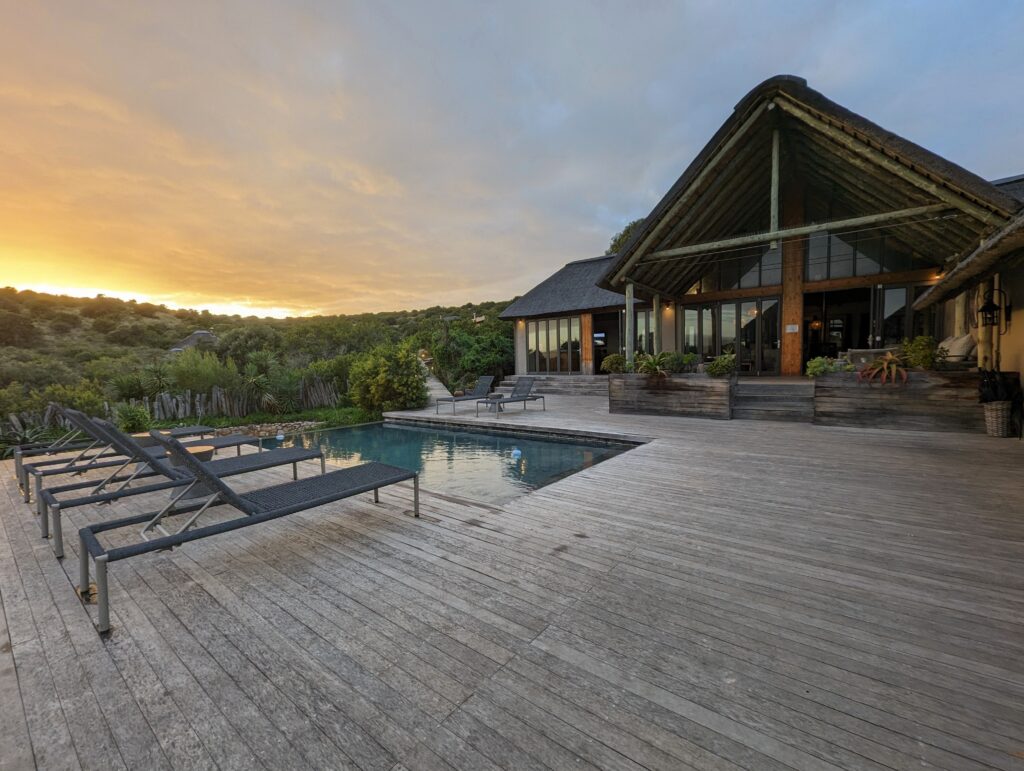
South Africa is larger than many UK travellers realise.
Distances are manageable when planned well, but they should not be underestimated.
Self-drive can work beautifully in certain regions, especially the Garden Route, Winelands and parts of the Western Cape or the Drakensberg. It gives you freedom, flexibility and good value.
Private drivers or guided transfers make sense when you want to enjoy wine tastings, avoid city driving, add cultural context or simply take pressure off the day.
Internal flights can save time, but once you factor in airport transfers, check-in times and baggage limits, they need to be used carefully.
For a fuller breakdown, read Should We Self-Drive or Use a Private Driver in South Africa?. That decision can make a noticeable difference to both cost and confidence.
This is what I would call a sensible first South Africa trip.
Not bare-bones.
Not luxury.
A good quality, carefully planned introduction.
Example Structure
Who This Suits
This range can work well if you:
The Honest Limitation
At this level, you will probably need to make choices.
You may not get the most exclusive safari lodge.
You may not have private guiding throughout.
You may need to keep the route focused rather than adding every region that looks appealing.
This is often the right range for travellers who want to experience South Africa properly, but are comfortable prioritising.
A possible route could be:
4 nights Cape Town
2 nights Franschhoek or Stellenbosch
3 nights safari in the Eastern Cape or Welgevonden
1 final night near the airport if needed
This can be a lovely first trip, especially if you like a balance of city, food, scenery and wildlife.
This is the range I would describe as the sweet spot for many couples.
It gives you more room to create a trip that feels smooth rather than squeezed.
Example Structure
Why This Range Works Well
This is where you can often avoid the most frustrating compromises.
You are not necessarily paying for obvious luxury.
You are paying for better flow.
That might mean:
For many thoughtful travellers, this is where South Africa starts to feel layered.
Not just “we saw Cape Town and did safari”, but:
“We understood more of the country.”
“We had time to enjoy the Winelands and Garden Route properly.”
“We did not feel rushed.”
“We came home with stories, not just photos.”
A possible route could be:
5 nights Cape Town
2 nights Franschhoek
4 nights private or high-quality safari
2 nights Johannesburg or Pretoria for history, food and cultural context
That final Johannesburg or Pretoria element is often overlooked, but it can add a great deal of depth when done well. If you are curious about whether the city belongs in your itinerary, What Are the Best Places to Visit in South Africa? can help you think beyond the obvious route.
This is where the trip becomes more premium, especially around safari and private arrangements.
It may suit milestone birthdays, retirement celebrations, significant anniversaries or couples who know this may be their only South Africa trip and want to do it very well.
Example Structure
What You Are Paying For
At this level, the differences are often less about “more” and more about “better”.
Better pacing.
Better guiding.
Better safari access.
Better location.
Better support.
Better use of your time.
The trip should not feel packed just because the budget is higher. In fact, a higher budget should often buy you more breathing room, not more rushing around.
A possible route could be:
5 nights Cape Town
3 nights Winelands
4 nights Sabi Sands, Timbavati, Madikwe or another private reserve
4 nights Garden Route, Drakensberg or Johannesburg depending on interests
This is also the range where conservation-led experiences can be woven in more thoughtfully. If that appeals, you may want to read What Are the Best Conservation Experiences That Go Beyond Just Watching Wildlife? before deciding where to spend.
Once you move beyond £20,000 for two, you are usually in one of four situations.
This is where costs can climb quickly, but it is also where South Africa can become a beautifully complete journey.
A honeymoon might include:
Cape Town for food, views and culture
The Winelands for slower days and excellent dining
Safari for the sense of occasion and shared adventure
Mauritius or Seychelles for a softer ending
The key is not to make every element expensive for the sake of it.
The best luxury South Africa trips are not always the flashiest.
They are the ones where the money has been spent in the right places.
South Africa is one of the strongest honeymoon options from the UK because it gives you variety without feeling like several unrelated holidays bolted together.
You can have:
For 2026, a realistic honeymoon range for two is often:
£10,000–£22,000+
That is a broad range because honeymoons vary enormously.
A South Africa-only honeymoon may sit closer to the lower or middle part of that range.
A safari plus Mauritius or Seychelles combination will usually push higher, especially if you want special room categories, direct flights, private transfers and a stronger beach element.
The question is not simply “what does a honeymoon cost?”
A better question is:
“Which part of the honeymoon matters most to us?”
If it is safari, spend there.
If it is the beach finish, protect that budget.
If it is food, wine and atmosphere, give the Winelands enough time rather than squeezing them into one rushed night.

Even when the main holiday is arranged well, you still need realistic spending money.
Common extras include:
Kruger National Park’s international conservation fee for 1 November 2025 to 31 October 2026 is listed at R602 per adult per day, and some private reserves or lodges charge separate conservation levies too. These are not usually huge in the context of the whole trip, but they can add up if you have not allowed for them. (SANParks)
As a simple rule, I would allow:
£750–£1,500 per couple
for on-the-ground extras, depending on how much is already included and how you like to travel.
Safari tipping can also surprise UK travellers because the culture is different. If you are unsure what is normal, What Are the Tipping Norms in South Africa, and Who Do You Tip? is worth reading before you travel.
For a fuller breakdown, see What Hidden Costs Should You Budget For on a Trip to South Africa?.
This distinction matters.
A budget trip asks:
“What is the cheapest way to include these places?”
A good value trip asks:
“Where will our money make the biggest difference?”
Those are very different questions.
In South Africa, good value might mean:
The goal is not to make the trip cheap.
The goal is to avoid wasting money on things that do not improve the experience.
That is especially important for travellers who want meaning, comfort and cultural depth, not just a checklist.
Season makes a difference.
South Africa is not one-season-fits-all.
Cape Town and the Winelands are at their most popular during the South African summer, roughly November to March, with peak prices around Christmas and New Year.
Safari regions such as Kruger, Madikwe and parts of the Waterberg are often excellent in the dry winter months, roughly May to September, when wildlife viewing can be stronger.
Shoulder seasons such as May, early June, September and October can be very attractive because they often balance weather, wildlife, availability and value.
But the best-value month depends on what you want to do.
A wine and food trip has different timing from a safari-led trip.
A family holiday has different constraints from a retired couple with flexible dates.
A beach extension has different weather considerations again.
Before choosing dates, read When Is the Best Time to Visit South Africa?, because the cheapest month is not always the best month for your version of the trip.
Not every part of a South Africa holiday needs the same level of investment.
For many couples, I would prioritise spending in this order:
Because the difference between an average safari and a very good one is significant.
Better guiding, reserve quality, location and time in the bush can completely change how the safari feels.
A well-located stay can save time, reduce stress and improve your evenings.
This matters in Cape Town, the Winelands and safari regions.
Poor routing is one of the biggest ways to waste money.
You may pay for beautiful places but experience them tired, rushed or at the wrong time of day.
Not every day needs a guide.
But in places like Johannesburg, Soweto, the Battlefields, certain cultural experiences and conservation projects, a good guide can change the whole meaning of the day.
If this is a celebration trip or honeymoon, it can be worth making the final stay feel special.
Ending well matters.
You can save money without damaging the experience if you are thoughtful.
Christmas, New Year, Easter and February half-term can push costs up quickly.
Three well-chosen regions often feel better than five rushed ones.
Use boutique guesthouses or smaller hotels where they make sense, then invest more heavily in safari.
Johannesburg can sometimes offer better-value flight options than Cape Town, and clever routing can help.
Some of South Africa’s most rewarding moments are not expensive: a coastal walk, a market visit, a slow lunch, a botanical garden, a conversation with a good guide.
A trip does not need to be full of paid excursions to feel rich.
Before you decide what you “should” spend, ask yourselves:
Is this your first South Africa trip or your only South Africa trip?
If it is the first of several, you can keep it focused.
If it may be your only visit, you may want to invest more in safari, guiding and pacing.
Is safari the main event or one part of the trip?
If safari is the dream, protect that budget.
If safari is just one element, a more modest but well-chosen option may be enough.
Do you want independence or ease?
Self-drive can save money and give freedom.
Private transfers and guided days cost more but may reduce stress and add context.
Are you happy with good guesthouses, or do you want standout hotels?
South Africa has excellent smaller properties. You do not need big-name luxury everywhere.
Do you want to understand the country more deeply?
If yes, budget for guiding and experiences that add context, not just views.
How much support do you want if something goes wrong?
This is not the most glamorous question, but it matters.
If you are booking separate elements yourself, make sure you understand who helps if flights change, luggage goes missing, a transfer fails or an itinerary needs adjusting.
You may find What Happens If Something Goes Wrong While We’re There? Who Actually Helps Us? useful here.
A lower budget can work well if:
There is nothing wrong with that.
South Africa does not need to be polished to be meaningful.
Some travellers have wonderful experiences with guesthouses, self-drive routes, simple meals and fewer inclusions.
The key is being honest about what you are comfortable managing yourself.
It may be worth increasing the budget if:
Spending more does not guarantee a better trip.
But spending in the right places often does.
The biggest mistake is comparing totals without comparing what is included.
For example, one quote may include:
Another may look cheaper because several of those elements are missing or paid locally.
Neither is automatically wrong.
But they are not the same holiday.
Before deciding one option is expensive and another is good value, ask:
What is included?
What is excluded?
Who is responsible if something changes?
Does the routing make sense?
Will this feel relaxed once we are there?
Are we spending in the places that matter most to us?
That is how you make a confident decision.
When I help travellers think through South Africa, I do not start with hotels.
I start with the shape of the trip.
What matters most?
Wildlife?
Wine?
Food?
History?
Scenery?
Time together?
A sense of place?
Not feeling rushed?
Then I look at where the budget will have the most impact.
Sometimes that means spending more on safari and keeping Cape Town simpler.
Sometimes it means choosing a beautiful Winelands base because food and wine are central to the trip.
Sometimes it means adding a guide in Johannesburg because the right person can turn a city people often skip into one of the most memorable parts of the journey.
Sometimes it means saying no to an extra region, even if it sounds appealing, because the trip will be better without it.
That is the part travellers often underestimate.
A good South Africa holiday is not just a list of places.
It is the order, pace, logistics and judgement behind those places.
If You Prefer to Plan Independently
Build your route carefully.
Focus on:
Then read these alongside your planning:
If You Would Like Help Sense-Checking What Is Realistic
A good starting point is a conversation about your budget, travel style and priorities.
Not to force a particular kind of trip, but to understand what matters most and where your money will genuinely make a difference.
That may mean a carefully balanced first South Africa holiday.
It may mean a slower, deeper trip with fewer places.
Or it may mean deciding that now is not the right moment and planning properly for the following year.
Any of those can be the right answer.
The aim is simply to make the decision with clear information, realistic expectations and confidence.